
Posted on Sunday, 14 June 2026
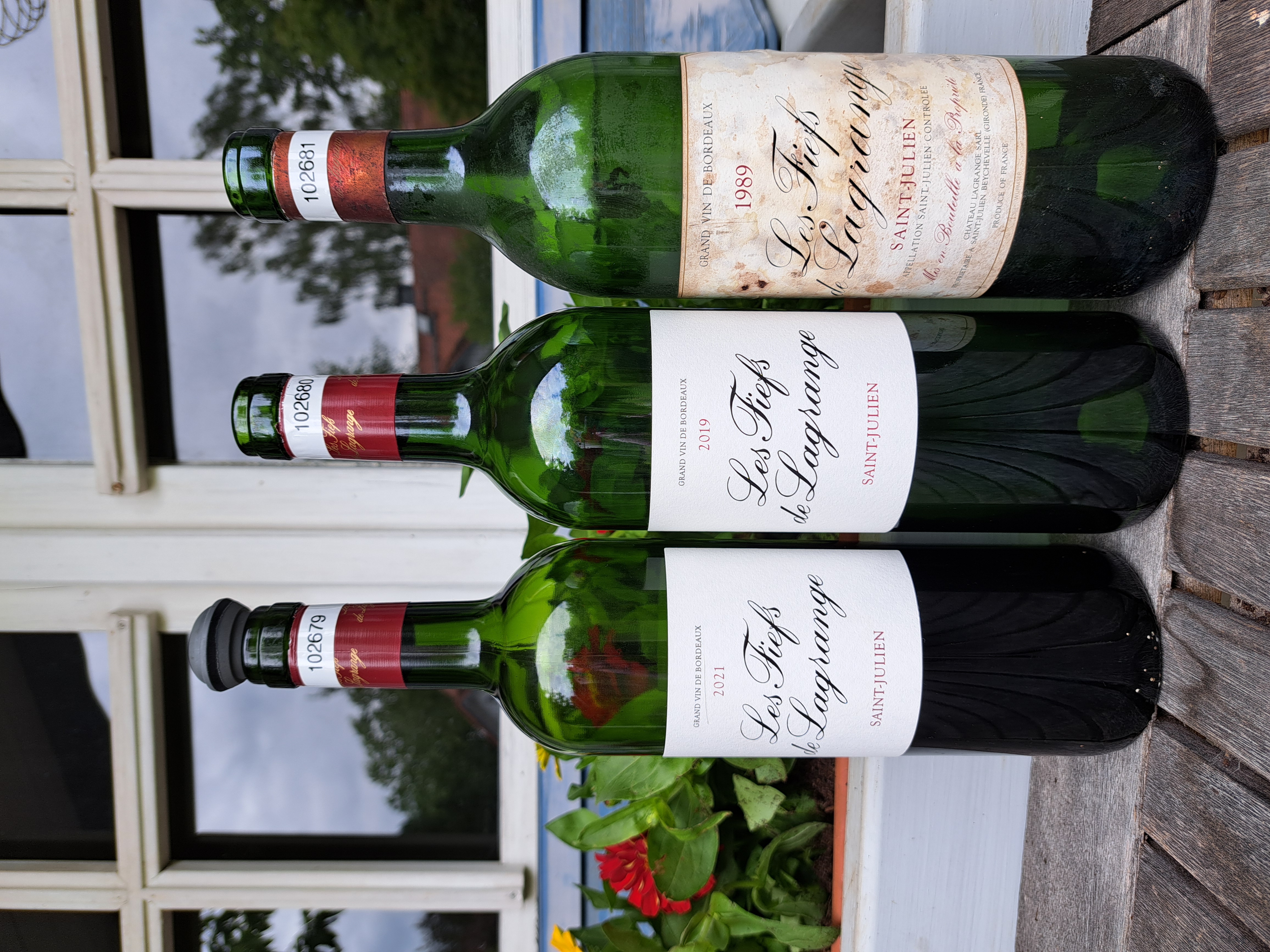
I still had a few bottles of Château Lagrange in the cellar, including the second wine "Les Fiefs de Lagrange", namely the 2021, 2019, and 1989 vintages. So why not open all three and compare them? The "little" Lagrange is typically made using a maximum of one-fifth new oak, thereby being more on the primary fruit-side compared to the Grand Vin, and is a classic Bordeaux blend of Cabernet Sauvignon, Merlot, and Petit Verdot. Here, too, the berries are sorted by hand, but the harvest naturally comes from slightly less exposed sites or younger vines. In certain years, "Les Fiefs" accounts for two-thirds of the château's total production.
Medium, youthful purple paling towards the rim. The bouquet is fresh and of subtle intensity, driven by crisp red fruits — sour cherry and redcurrant — with hints of blossom and dark chocolate. On the palate, it is lively and light-bodied; juicy fruit is supported by bright acidity and soft tannins. Reminiscent of a refreshing cherry juice, it is highly approachable, though displaying limited depth before a short, pleasantly fruit-forward finish. Maintains its style over several days of tasting.
Medium purple with thick legs, the nose opens with a generous bouquet of plum, cherry, blueberry, and blackcurrant, balanced by clove, liquorice, earthy beetroot, and a lifted touch of eucalyptus. On the palate, this medium-bodied wine shows fine-grained tannins, seamless alcohol, and structured acidity. Abundant juicy, slightly stewed cherry and blackcurrant notes dominate, maintaining excellent balance and drinkability through to a vibrant, medium-length finish. This is a highly convincing second wine that treads fine wine territory, lacking only ultimate complexity. However, tasting it over three days revealed that the fruit intensity diminishes from day two onwards, leaving the palate feeling drier and noticeably warmer.
The saturated cork broke, requiring the wine to be decanted. Its cherry-red hue surprised me, despite browning at the rim. An initially uninviting "musty cellar" bouquet dissipated within minutes, revealing balsamic notes and sweet cherry cola. Otherwise, the wine was rather dried out — a character confirmed on the palate. This bottle should likely have been drunk twenty years ago. No rating.
Tasting these three vintages side by side was fascinating, although I know this does not represent a complete vertical by any means. While the youthful 2021 offered a vibrant, light-bodied freshness that made it easy-drinking, it was the convincing balance and intensity of the 2019 that truly stole the show on paper, despite its early fading over three days. I'd say they are good representatives of their respective vintages, with the 2021 having been rather cool and the 2019 on the warm side. The fragile 1989 was a poignant reminder of the gamble of cellaring. I've since spoken to another wine enthusiast who had a far better experience with a 1989 Les Fiefs not that long ago, back in 2022. If I had to pick one, I'd probably choose the 2021 for being so approachable and light (in the best sense of the word). Ultimately, opening them together brought immense joy, proving that the true magic of wine lies in sharing these fleeting liquid histories.
Looking ahead, I still have two Château Lagrange (Grand Vins) in my cellar—both from hot years, coincidentally: 2018 and 2003.
Join the discussion: Only logged-in members can read and write comments. Please log in to participate.